fit · how to buy · outerwear
How Oversized Is Meant to Fit
House of Nova · August 25, 2026 · 4 min read
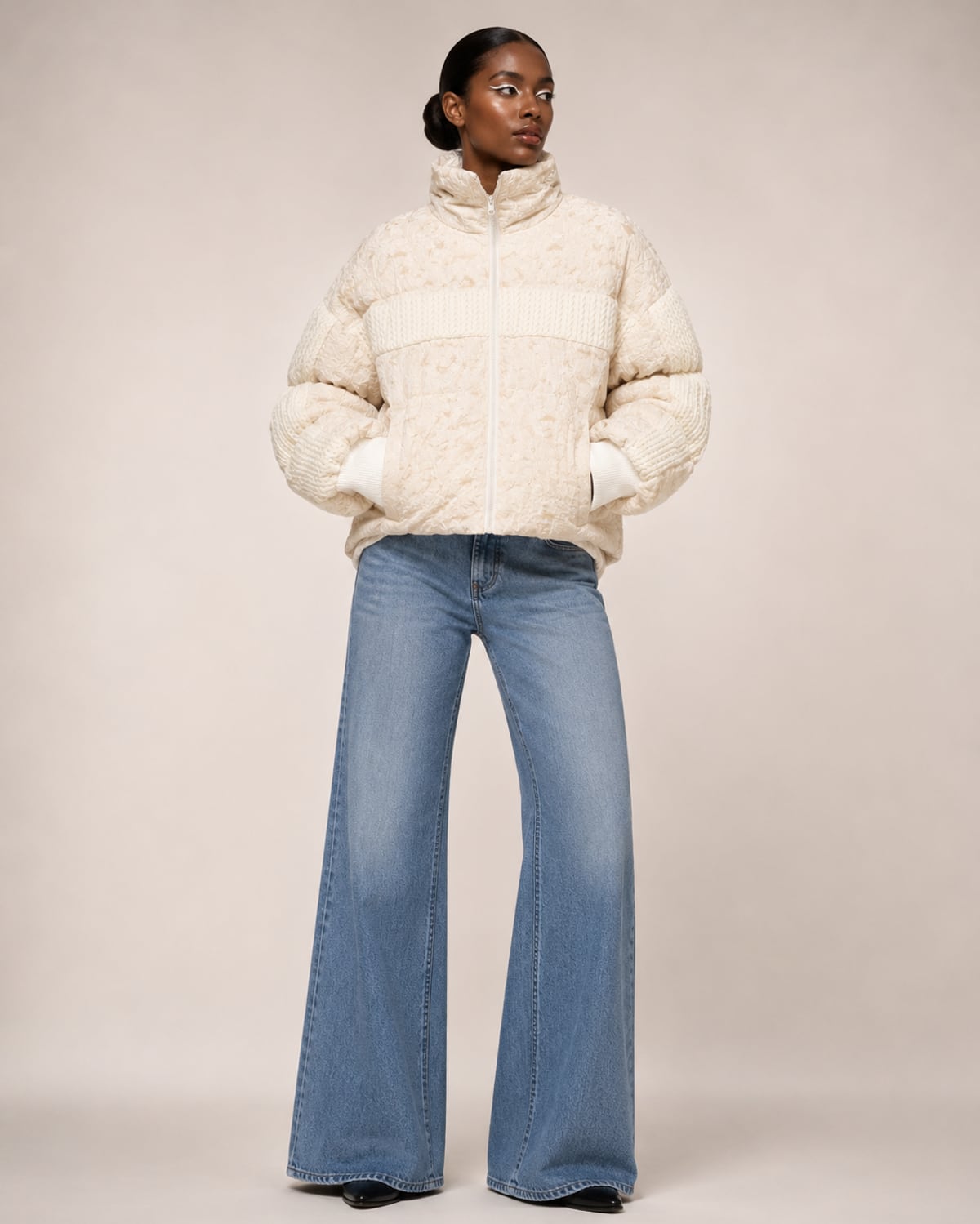
A garment cut oversized and a garment that is simply too big can measure almost the same and look nothing alike. The difference is deliberate, and it is mostly in three places.
Oversized is drafted, not scaled
When a design is cut oversized, the pattern is redrawn. The shoulder is extended past the natural shoulder point on purpose, the armhole is dropped to suit that new shoulder, the body is widened, and the sleeve is re-cut to hang correctly from a seam that is no longer where a shoulder seam usually is.
When you simply buy a larger size, every one of those measurements grows together — including the ones you did not want to change. The neck opens. The armhole drops, but so does the whole bodice, so the waist lands lower. The sleeve gets longer as well as wider.
That is the tell. A too-big garment looks like it belongs to someone else because it is proportioned for someone else. An oversized garment is proportioned for you and given volume on purpose.
The shoulder is the diagnostic
If you check one thing, check where the shoulder seam sits.
On a conventionally fitted garment it sits on the bony point of your shoulder. On a well-cut oversized one it sits deliberately beyond it, somewhere on the upper arm, and it sits there evenly on both sides and level. That extended shoulder is what makes the silhouette read as a decision.
What you do not want is the seam falling halfway down the arm at an angle, or the armhole dropping so low that the sleeve binds when you lift your arm. Volume in the body is a design choice; a sleeve that restricts movement is a fit failure, and the two are easy to confuse when everything is loose.
Raise your arms. Reach forward as if for a steering wheel. An oversized coat should let you do both freely — that room is the point of it.
Volume needs one point of contact
The reason large clothing reads as shapeless is that nothing establishes where the body is. The eye needs one place to locate you, and then it reads the rest as intentional.
That point can be almost anywhere. A defined shoulder line. A cuff that closes at the wrist. A hem that stops at a specific place on the leg. A neckline that stands. What matters is that there is one, and that everything else is allowed to be generous around it.
This is why an oversized coat over an oversized jumper over wide trousers usually fails: there is no reference point anywhere in the outfit, so there is no proportion to read, only fabric. Fix it by narrowing exactly one thing.
Length is the alteration to make
Very few oversized garments need taking in. Most need shortening.
The width is designed. The length, on the other hand, is drawn for a sample height and there is nothing considered about where it happens to land on you. A sleeve that swallows the hand and a hem that cuts the leg at its widest are the two things that most reliably make a well-cut garment look like a mistake.
Both are cheap alterations, and both are worth doing on the day you buy rather than the third time you decline to wear it. Sleeves in particular: on outerwear the cuff usually carries hardware or a rib, so ask what it costs before assuming it is simple.
On two-size ranges
Some houses cut a single design in two broad sizes rather than six narrow ones. It is not a shortcut. When a garment is drafted with deliberate volume, the ease already absorbs much of the variation that graded sizing exists to handle, so the meaningful decisions become how much volume you want and where the length falls.
House of Nova cuts to two sizes on that reasoning. The practical consequence is worth stating plainly: you are choosing a proportion rather than matching a measurement, and length is where the tailoring happens.
If you are between the two, the honest question is not which is closer to your measurements. It is which silhouette you want — the fuller drape or the closer one — because both will fit.
Let Aurra style your next moment.
Generate my look